

Jersey cattle are one of the most recognizable and beloved dairy breeds in the world. Known for their gentle temperament, rich milk, and beautiful golden coloring, Jerseys have long been valued as efficient family milk cows well suited to homesteads and small farms.
Compared to larger dairy breeds, Jerseys are easier to feed, manage, and handle while still producing impressive quantities of exceptionally rich milk. Their milk is naturally high in butterfat and protein, making it especially prized for cream, butter, yogurt, and cheesemaking.
Many people are surprised by just how rich Jersey milk can be. Cream rises heavily to the top, and on occasion small pieces of butterfat may even float in fresh milk straight from the cow.
At Farm Arcadia, we focus on carefully selected A2A2 Jersey genetics chosen for:
- sustainable homestead dairying
- rich milk production
- gentle disposition
- grazing efficiency
- strong maternal traits

What Makes Jerseys Unique
Jerseys are widely recognized as one of the most feed-efficient dairy breeds in the world. Pound for pound, they convert feed into butterfat and protein more efficiently than larger dairy breeds.

Typical mature cows produce:
- approximately 4–5+ gallons of milk daily
- around 4.8% butterfat
- approximately 3.7% protein
Their naturally rich milk makes Jerseys especially popular for butter, cream, yogurt, ice cream, and artisan cheesemaking.
Jerseys are also known for:
- and calm, people-oriented temperaments
- excellent fertility
- calving ease
- adaptability to many climates
- long productive lives
Mature American Jerseys generally weigh approximately 880–1,100 pounds. This smaller size makes them especially appealing for homesteads and small acreage farms. Bulls, however, can become very large, unpredictable, and are not recommended for inexperienced handlers or homestead settings.
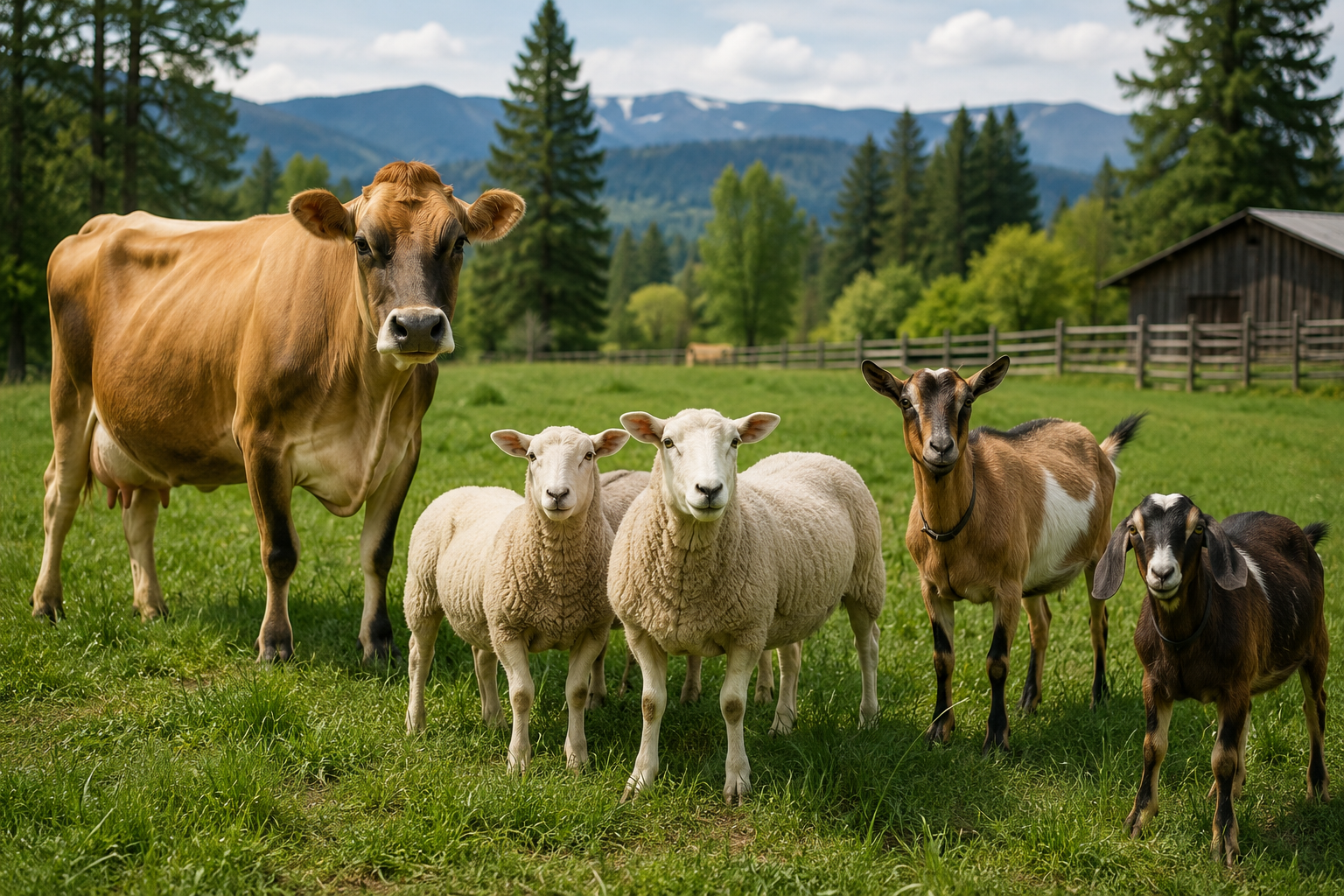
If considering adding a dairy animal to your homestead, you may be interested in reading our comparison of sheep, goats, and Jersey cows.
A Heritage Dairy Breed
The Jersey breed originated on the British Channel Island of Jersey, where cattle were selectively bred in isolation for more than 200 years. That long period of controlled breeding helped establish the Jersey as one of the most consistent and recognizable dairy breeds in the world.
Today Jerseys are appreciated internationally for:
- and dairy temperament
- rich milk production
- grazing efficiency
- longevity
In the United States, the primary breed organization is the American Jersey Cattle Association (AJCA) where our own Jerseys are registered.
Jreseys are typically light to dark brown, sometimes gray or dull black. They often have dark faces or white around their muzzle, lighter bellies, and dark hooves and tail switches.
They are especially recognizeable for their large dark expressive eyes and refined feminine dairy appearance.

Understanding A2A2 Milk
One of the primary goals of our breeding program is maintaining A2A2 Jersey genetics. Beta-casein is the primary protein found in milk, making up roughly 80% of the protein content. Cattle inherit two beta-casein genes identified as either A1 or A2. A cow may therefore be A1A1, A1A2, or A2A2

A2 is considered the older and more traditional form of the protein, while A1 developed later as a natural genetic mutation that became increasingly common among many modern commercial dairy populations.
Many families specifically seek A2A2 milk because they feel it is easier for them to digest compared to conventional milk. Goat milk and sheep milk naturally contain only A2 beta-casein, which is one reason they are often considered easier to digest.
Interest in A2 milk has grown significantly in recent years, especially among homesteaders and people seeking more traditional dairy genetics. The A1 protein breaks down differently when digested and one of the segments is suspected to contribute to diabetes, heart disease, autism, schizophrenia and other non-communicable diseases. Research into A1 and A2 beta-casein is still ongoing and difinitive cause-effect relationship is still being evaluated.
All of our retained breeding cattle are DNA tested to verify their beta-casein status, and we strongly prioritize A2A2 genetics within our program.
Why Jerseys Work So Well for Homesteads
For many homesteads, Jerseys offer an ideal balance between productivity and manageability.
Their smaller size means:
- less feed consumption
- easier handling
- less infrastructure
- and gentler impact on pasture
while still producing abundant rich milk for a family. Jerseys are often described as affectionate, gentle, personable, and intelligent making them especially popular as family milk cows.
Their grazing efficiency and adaptability also make them excellent candidates for small farm sustainability, rotational grazing systems, regenerative agriculture, and grass-based dairying.


We occasionally have Jersey cattle and calves available for homesteads and small farms. Please check out our currently available, upcoming available, and waitlist available Jersey cows and calves.

Each spring, we bring in a select group of Jersey calves from a trusted dairy in Tillamook County, Oregon. This guide explains how our spring calf program works, what types of calves are available, and how to join the waitlist for upcoming trips.

Coming Soon
Calf and Jersey care guide coming soon.