

The East Friesian is widely regarded as the premier dairy sheep breed in the world. Developed over centuries in the coastal regions of the Netherlands and northwest Germany, these gentle and highly productive sheep became the gold standard for milk production, fertility, and dairy temperament.
East Friesian dairy sheep are especially valued for:

- Exceptional milk production
- Rich milk with high butterfat and protein
- Calm, manageable temperaments
- High fertility and prolific lambing
- High quality meat and mid-grade wool
- Efficient grazing and pasture use
- Excellent suitability for homesteads and small dairies
Though still relatively uncommon in the United States, East Friesians are increasingly attracting interest among homesteaders, artisan cheesemakers, and small farms seeking sustainable dairy animals with historic roots and remarkable productivity.
Why People Choose East Friesian Sheep
East Friesians were developed specifically as dairy sheep, and nearly every aspect of the breed reflects that purpose.
Like dairy cattle and dairy goats, they were selectively bred not only for milk production, but also for temperament and ease of handling. A good dairy animal must tolerate close daily interaction, regular milking, and management around people.
The breed is particularly well suited to:
- Cool climates
- Moist pasture environments
- Rotational grazing systems
- Small farms and homesteads
- Artisan dairy production

East Friesian sheep are often described as intelligent, personable, and relatively easy to work with compared to many meat-oriented sheep breeds. Their milk is used around the world for Feta, Brie, yogurt, butter, ice cream and gelato, cottage cheese, Artisan cheeses, and many other dairy products. Because of their extraordinary milk production, East Friesians are also commonly used to improve other dairy sheep breeds throughout the world.
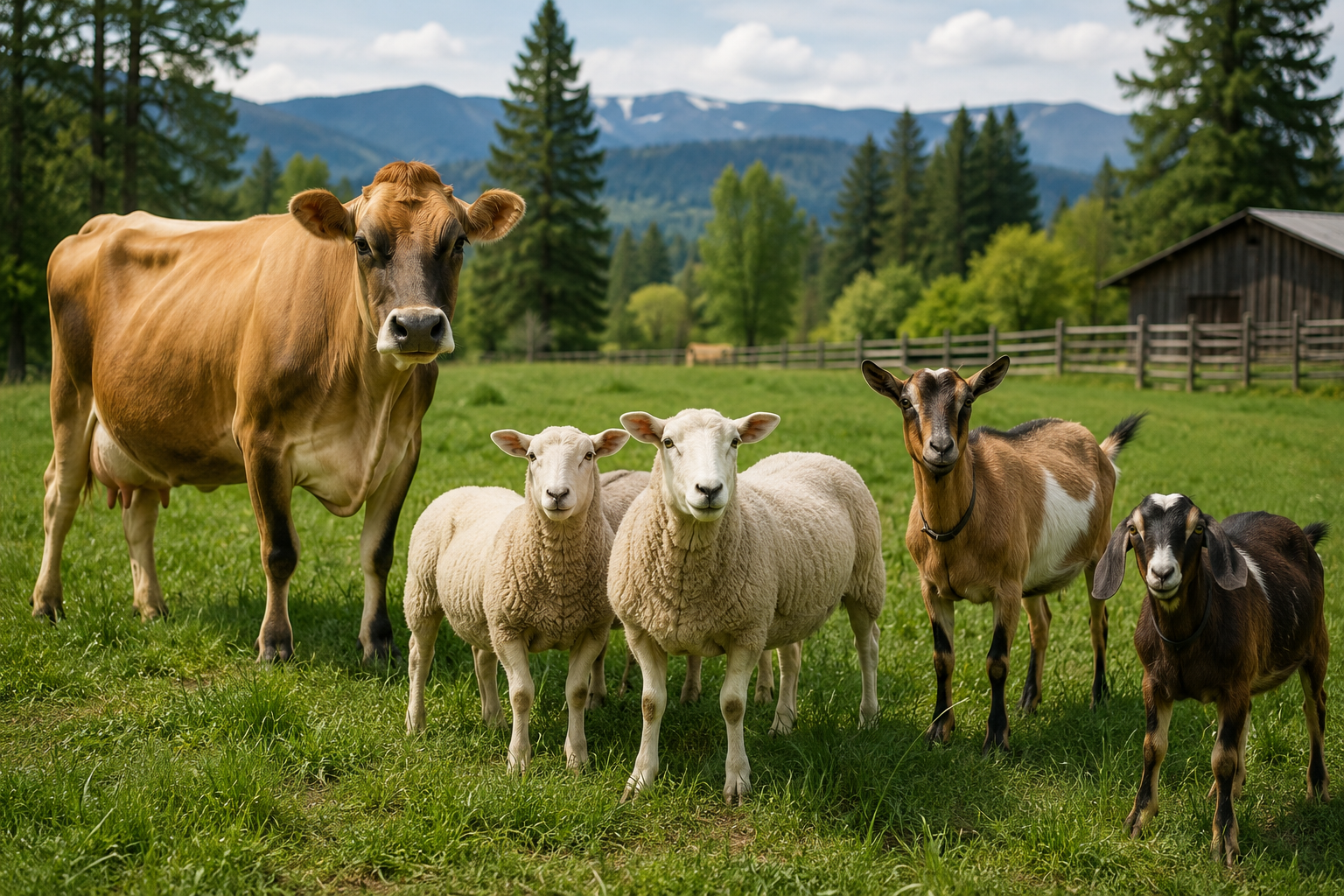
Considering a dairy animal for your homestead? See how sheep, goats, and cows compare.
Milk Production

Among dairy sheep breeds, East Friesians are considered the benchmark for milk volume. Typical production averages include:
- Ewes 2–4 years old: Approximately 130–160 gallons of milk per lactation
- Ewes 5 years and older: Often 185+ gallons per lactation
Milk composition commonly averages:
- 5.8–6% butterfat
- 5–5.2% protein
Lactations generally range from approximately:
210–230 days
East Friesian milk is especially valued for cheesemaking because of its rich solids content and naturally creamy texture. The breed is also highly fertile, averaging approximately 1.9 lambs per ewe annually under good management.
The American translation and correct spelling of the sheep breed is “East Friesian.”
Friesian is pronounced /ˈfriː.ʒən/ (free-zshun).
A Breed with Deep Historical Roots
The East Friesian is an ancient dairy breed believed to have developed roughly 1,000 years ago along the coastal meadows stretching from Zeeland in the western Netherlands through Friesland and into northwestern Germany.
The breed takes its name from Friesland, a historic coastal region bordering the North Sea.
The modern Dutch breed is known as:
- Fries Melkschapen or Frisian Melkschapen
Historically, western populations were also known as:
- Zeeland Melkschapen
Today these are maintained together within the same Dutch studbook. In Germany, Austria, and Switzerland, the breed is known as:
- Ostfriesische Milchschaf

The oldest active studbook for the breed dates back to 1908 in the Netherlands, though organized preservation efforts began even earlier. One of the most influential preservationists was K.N. Kuperus of Marssum, who established a private sheep registry in 1885 after the breed began declining due to crossbreeding with imported English sheep breeds. The first recorded formal description of the breed dates to approximately 1840.
An Endangered Heritage Breed
Despite their extraordinary dairy qualities, East Friesians remain a rare heritage breed. During the mid-1900s, the Dutch population declined dramatically and approached near extinction, with numbers reportedly falling to only a few hundred breeding animals.

Today the breed still maintains endangered status in Europe.
Modern Dutch studbook membership includes:
- A small number of commercial dairies
- Hobby breeders
- Less than 1,000 active breeding sheep
The breed’s continued survival depends heavily on dedicated breeders working to preserve milk production, fertility, temperament, breed character, and genetic diversity with retaining purebred flocks. As with many heritage livestock breeds, conservation is not simply about preserving appearance — it is about preserving valuable agricultural genetics and centuries of selective breeding knowledge.
Shown above: In the masterpiece The Ghent Alterpiece (AKA Adoration of the Mystic Lamb of God), an earlier East Friesian sheep is depected on one of the panels. The alterpiece in the Cathedral of St. Bavo in Ghent, Belgium was attributed to Netherlandish brothers Jan and Hubert van Eyck, completed in 1432.
East Friesians in Modern Homesteading
East Friesian dairy sheep are increasingly well suited to modern homesteads and small-scale agriculture. Their combination of manageable size, rich milk production, grazing ability, and personable temperaments makes them especially attractive for families and small farms seeking sustainable dairy animals.
They also fit naturally into:
- rotational grazing systems
- mixed livestock operations
- artisan dairy production
- regenerative agriculture
- small acreage farming
Because sheep require less space and feed than dairy cattle while still producing rich, valuable milk, many homesteaders see East Friesians as an appealing alternative for home dairy production.

If you are considering adding East Friesians or other dairy animals to your homestead, we compare dairy animals for the homestead. We also have information about buying sheep for your flock.
Preserving the Future of the Breed
Though still uncommon in the United States without previously established and maintained purebred lines, East Friesians represent one of the most important dairy sheep breeds in the world.

Preserving the breed means protecting:
- historic dairy genetics
- sustainable milk production
- rare heritage bloodlines
- and a unique agricultural tradition developed over centuries along the coastal meadows of Friesland.
With careful breeding, responsible stewardship, and growing interest among homesteaders and small dairies, East Friesian sheep continue to offer tremendous potential for the future of sustainable agriculture.
Shown above: August Friedrich Schenck painted “Anguish” around 1878 and appears to be the old East Friesian breed.

Coming Soon
If you are interested in purchasing Arcadian East Friesian sheep or purebred East Friesian semen, please visit our sales listing page. We sell most of our sheep from a waitlist. More info on the waitlist is also available on our sales page.

Coming Soon
Our studbook (registry) is available through an online searchable database to verify pedigrees. Sign up for access to our registry, view the East Friesian Breed standard, visit the shared East Friesian marketplace, view the registry member directory, or sign up for membership.

Sheep
Buyer’s Guide
Coming Soon
There is a lot more to share about East Friesians, our flock, how to buy sheep, and some basic sheep care pointers. Please browse our pages with more information to see if we have answers to questions you may have.