
Please scroll down to find additional information grouped by topic including: Arcadian East Friesians; process of buying sheep; sheep semen, artificial insemination (AI), and embryo transfer (ET); sheep diseases; our vaccination, deworming, and medicating practices.
Arcadian East Friesians
Why “Arcadian” East Friesians:
Placeholder
How lambs and sheep are raised:
Placeholder
Genetic testing for parentage confirmation:
Farm Arcadia began a DNA record of our foundation flock by DNA testing all live ewes and rams imported from Canada. The donor rams (semen and embryos) and donor ewes (embryos) were genetically recorded as well from blood samples provided by the live sheep. All Arcadian East Friesians are then DNA tested to verify parentage. The genetic database is maintained by and parentage testing performed by Neogen.
The genetics results are privately owned by us, so others may not provide samples to compare to verified parentage of test results we own. However, we don’t ask buyers to just trust us that parentage is what we say it is. With the purchase of a sheep, we provide DNA evaluation results from Neogen that support the parentage shown through documentation such as pedigree. We also provide copies of the original import documents and registration information, as available, on our foundation flock if purchasing first or second generation sheep from Farm Arcadia.
Scrapie genetic susceptibility testing:
All of our European-sourced East Friesians have been genetically tested to be completely resistant to scrapie. We will test our Canadian source pure EFs once we have them. We participate in a program to obtain (and then maintain) a Certified Scrapie Free Flock with the expectation that we will be able to export once all requirements are met. As part of the testing and flock surveillence with this program, we have all of our breeding ewes and all of our rams genetically tested for scrapie resistance with samples collected and submitted by a veterinarian. Our goal is to establish and maintain a 100% genetically scrapie-resistant flock. Scrapie testing results for parents of lambs as well as any ram sold are provided with the lamb is purchased. Ewe lambs we sell are not routinely tested for scrapies genetic resistance, but testing on her parents’ susceptibility is provided.
Pricing – why are our sheep so expensive:
I know more people think this question than will actually ask it. Our sheep are expensive, and I’m not afraid to share why, though I am not going to open my financial records. This is not justification for my pricing because we live in an economy where I can name my price. You’re not forced to pay it, but for those who are considering buying an Arcadia East Friesian, here is why my pricing is higher than the average high percentage East Friesian. And I promise you, I’m not getting rich doing this, I’m just hoping to cover my costs … eventually.
I buy the best I can find, and that costs more. If I’m going through the effort to bring in purebred East Friesians, I’m not going to pick up liquidation sheep from someone going out of business or settling the neglected estate of an older individual who bred East Friesians as pets or companions. They may have great genetics, but it’s a gamble. I select sheep who produce well and perform well in conformation to the breed standard. Selling offspring of champions and high producers is worth more and what I want for the foundation of my flock.
It is expensive to import sheep, semen, and embryos. There is the original cost of the sheep/semen/embryos but also health inspection and certification (including for semen and embryos), permit fees, and then the transportation cost. Embryos are especially expensive, but they fit in a frozen shipping tank and can come from countries that won’t allow live animals. I think the transportation cost is probably where it is most underestimated.
There is ongoing cost to store semen and embryos, then cost to use them. In my area, if I transport sheep about two hours each way, there is a total cost of about $200 per laparascopic AI performed by a veternarian (and estrus synchronization beforehand). Embryo transfer is even more. And, there is the cost of the semen or embryo on top of that. Assuming the ewe had twins, the starting cost of those lambs is considerably higher than natural bred lambs. However, this is a way to introduce needed genetic diversity and necessary to keep good lines without inbreeding.
Keeping and testing sheep has a cost, also, which is shared by all shepherds. However, after importing sheep, semen, or embryos and when participating in government disease eradication programs, there are additional tests, record-keeping, and inspections that are required. I can’t submit my livestock’s DNA samples myself for scrapies testing and have it count, I have to have a veterinarian do it so they can verify the animal it is taken from. If I permit my flock through the state, the vet must also collect samples for brucellosis and tuberculosis testing, not something I can just do. My regular costs from vaccination, deworming, feeding, housing, and veterinarian aside from that is ordinary.
The cost of proof and supporting the purebred status. This is also underestimated. There is not an established source of documented purebred East Friesians available in the US. We created that. To support the breed, there needs to be a registry and a way to prove animals are what they claim to be. Also, there needs to be a breed standard so that they can be shown competitively. And buying and selling purebred and documented cross-bred sheep is another challenge. In our effort to promote our sheep and the East Friesian breed, we created a registry, a DNA bank to test against to prove parentage, proof of the foundation flock, and a marketplace for sheep. This was not a free or simple endeavor.
Tagging, tattooing, branding, and microchipping practices:
Process of Buying Sheep
Requesting additional information / pictures:
Placeholder
Determine if a sheep are related:
Placeholder
About waitlists to buy sheep:
Placeholder
Transportation.
Placeholder
Exporting sheep:
Placeholder
Brand inspection and/or health certificates:
Placeholder
Health guarantees:
Placeholder
Mandatory record-keeping requirements (for Farm Arcadia & buyers):
Placeholder
Sheep Semen, Artificial Insemination (AI) & Embryo Transfer (ET)
Sheep artificial insemination is surgical, unlike goat, cow, or pig AI:
Placeholder
Owning a ram or rams versus AI:
Placeholder
Stud / tupping / breeding services:
We maintain strict biosecurity on our farm and do not offer any stud or tupping services to outside sheep. We regularly offer rams as well as frozen semen for sell to breed your ewes. Our rams are expensive, we know. To help justify getting them, we also offer a marketplace where registry members can list rams they own for sale or TRADE, which is a great option if you are trying to avoid annual cost of buying a new ram.
More about embryo transfers:
Placeholder
About semen for sale:
Placeholder
Sheep Diseases
Scrapie (transmissable spongiform encephalopathy, TSE):
Pronunciation: /ˈskreɪ.pi/ or “SKRAY – pee”
Disease Cause / Description: in genetically susceptible sheep, the disease is caused by prions (infectious particles that are abnormal versions of cellular proteins) found in nervous and lymph systems. These prions are highly resistant to destruction / treatment and trigger nearby normal proteins to change. This results in neurological deterioration and is fatal. It difficult to detect and causes significant industry losses in the US.
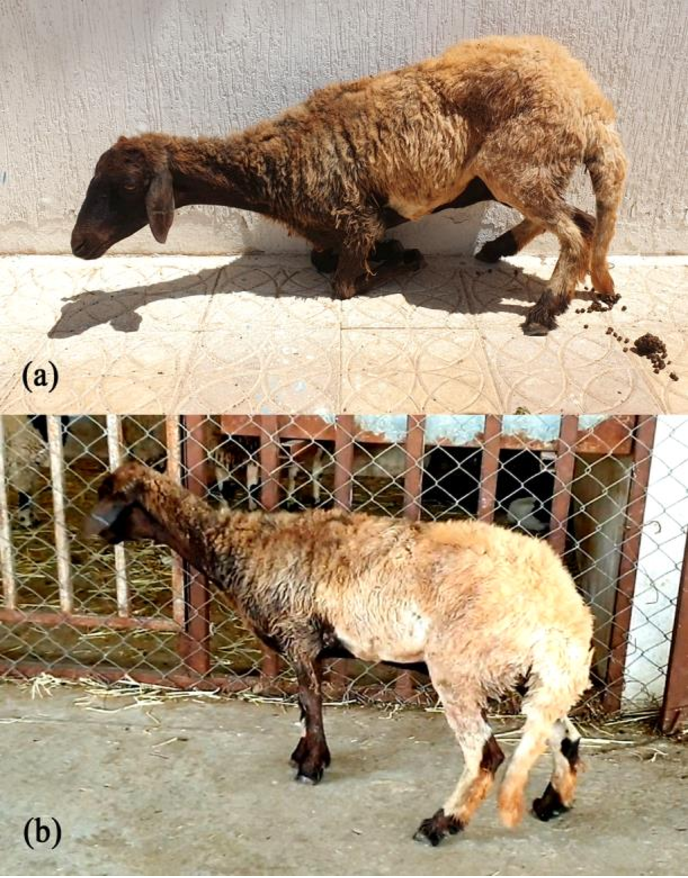
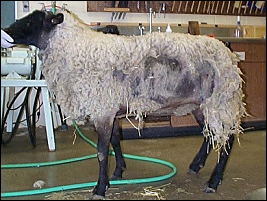
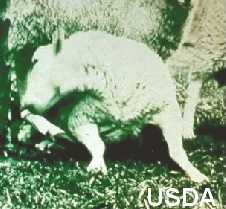
Spongiform encephalopathies caused by prions in other species include mad cow disease (cattle), Creutzfeldt-Jakob disease and Kuru (humans), and chronic wasting disease (deer & elk).
Transmission: not fully understood. Healthy sheep with the disease may spread it. It is usually contracted as a lamb though adults can get it, too.
Symptoms: usually develop 2-5 years after infection and may include
- Repeated intense rubbing (hence the name “scrape-ee”) that may result in bare areas or areas of rough, thickened, hyperpigmented, scraped skin on both sides of the animal’s body or head,
- Poor muscle control (ataxia),
- Weakness of any kind including stumbling, falling, difficulty rising,
- Abnormal gait involving both front or both back legs (or all four, but not just one leg or just one side) such as front leg high-stepping, back leg bunny hopping, or swaying,
- Tremors,
- Star gazing,
- Head pressing,
- Poor condition despite good access to food and good teeth.
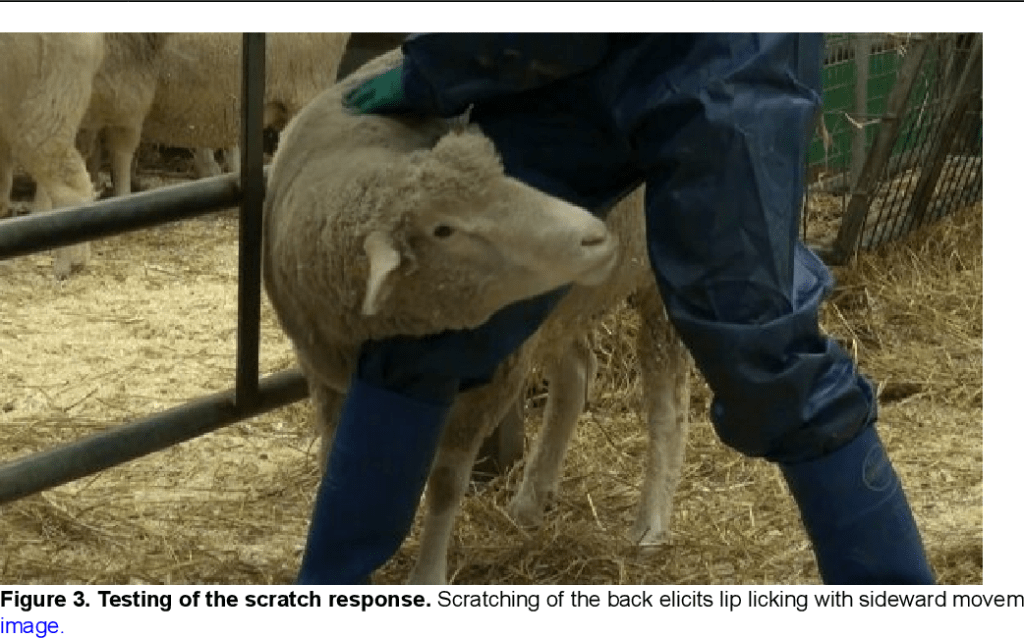
Scratching the back of an affected sheep will result in them turning their head to one side and licking their lips. While sheep cannot describe what they are experiencing, humans with similar disease experience dementia, insomnia, and confusion.
Prevention: sheep have to be genetically susceptible as well as exposed to the illness to contract it. There is no vaccine or treatment. Breeding for genetically resistant sheep is one method of prevention. Another is to avoid introduction of affected sheep by keeping a closed flock and post-mortem examination of all adult sheep that die (due to any cause) on the farm to monitor for disease. Buying sheep from a certified flock and genotyping are the primary measures to manage scrapie risk.
Transmissable to Humans / Other Livestock: scrapie is not transmissable to humans but is to sheep and goats. Some sheep have resistance, but a similar genetic trait has not been identified in goats. Prions are very difficult to decontaminate from the environment (resistant to alcohol, formalin, heat, and radiation), bind tightly to surfaces, and retain the ability to cause infection for years.
Ovine Brucellosis (Brucella melitenisis):
Disease Cause / Description: various bacteria species cause brucellosis with some cross-infection occuring between affected species. Brucella melitensis can affect both sheep and humans and is transmitted through direct contact or consumption of contaminated diary products. In humans, it may cause debilitating illness or localized organ involvement.
Symptoms: sheep may manifest
- Abortions and infertility,
- Swollen testicles,
- Joint swelling and lameness,
- Reduced milk production,
- Weight loss and weakness.
Treatment / Prevention: Antibiotics can alleviate illness an may be able to eliminate infection, though a latent (dormant) infection may persist. Vaccinations are available but not very effective in sheep. It is mainly transmitted through direct contact or ingestion of contaminated feed, water, or equipment or mother to young. Regular screening, good biosecurity, and goo hygiene reduce the risk of transmission. Consider culling sick individual sheep and not using offspring of infected ewes as flock replacements.
Even though Idaho allows the sale of raw milk for human consumption, animals being milked at part of the program require annual testing for brucella and negative test results.
Transmissable to Humans / Other Livestock: Some strains of brucellosis, including common ones, are transmissable to humans. This disease can be challenging because it can impact multiple species especially in mixed herds.
Ovine Progressive Pneumonia (OPP, maedi-visna) – CAE for Goat People:
Disease Cause / Description: OPP is caused by the slow maedi-visna virus (MVV) infection in sheep (and is the caprine arthritis encephalitis virus (CAEV) in goats). Since we’re talking about sheep, it is OPP, not CAE. The firus causes chronic pneumonia and wasting as well as mastitis, neurological problems, and arthritis. It usually affects sheep aged 2-3 years, but can affect any age. It is spread from an infected individual to others through colostrum ingestion, nose-to-nose contact, and rarely through uterine circulation.
Symptoms:
- Chronic pneumonia,
- Emaciation and wasting,
- Activity intolerance,
- Respiratory distress,
- Coughing,
- Joint problems
- Mastitis,
- Neurological issues,
- Weak offspring.
Prevention: There is no effective treatment or vaccine, so prevention is important. Test animals and cull those affected. Quarantine new animals for at least 30 days without close nose-to-nose contact.
Transmissable to Humans / Other Livestock: It is not transmissable to humans. It can be transmitted to other sheep and goats.
Johne’s Disease / Paratuberculosis (Mycobacterium avium):
Pronunciation: ˈyō-nəz or “YO – neez” disease
Disease Cause / Description: a gastrointestinal illness affecting ruminants caused by Mycobacterium avium. Johne’s disease is a contagious infection that is primarily spread through the manure of infected adults, some of which may not be ill, but also through infected ewes, contaminated milk, colostrum, or teats as well as contaminated feed, grass or water.
Symptoms: can vary with some infected sheep showing no signs but may be able to spread the infection. Sheep can develop:
- Weight loss despite normal or increased appetite,
- Diarrhe, often chronic and watery,
- Poor body condition and muscle wasting,
- Reduced milk production in ewes,
- Lethargy and decreased activity,
- Rough dull coat.
Prevention: There is no cure or approved treatment or immunization in the US. The disease is managed through testing and culling infected animals. Practicing strict biosecurity and maintaining a clean environment by regularly removing manure helps reduce the spread. Lambs should receive colostrum from disease-free ewes.
Transmissable to Humans / Other Livestock: Not transmissible to humans. It can also be spread to / by cattle, goats, deer, elk, and bison. Even farms that practice good biosecurity are at risk in areas with deer and/or elk.
Caseous Lymphadenitis (CL):
Disease Cause / Description:
Symptoms:
Prevention:
Transmissable to Humans / Other Livestock:
Bluetongue (BTV):
Disease Cause / Description:
Symptoms:
Prevention:
Transmissable to Humans / Other Livestock:
Barber’s Pole Worm (Haemonchus contortus):
Disease Cause / Description:
Symptoms:
Prevention:
Transmissable to Humans / Other Livestock:
Chlamudiosis, Ovine (Chlamydophila abortus, EAE):
Disease Cause / Description:
Symptoms:
Prevention:
Transmissable to Humans / Other Livestock:
Epididymitis, Ovine (Brucella ovis):
Disease Cause / Description:
Symptoms:
Prevention:
Transmissable to Humans / Other Livestock:
Footrot (dichelobacter nodosus):
Disease Cause / Description:
Symptoms:
Prevention:
Transmissable to Humans / Other Livestock:
Nairobi Sheep Disease (orthonairovirus, NSDV):
Disease Cause / Description:
Symptoms:
Prevention:
Transmissable to Humans / Other Livestock:
Peste de Prtits Ruminants (PPR):
Disease Cause / Description:
Symptoms:
Prevention:
Transmissable to Humans / Other Livestock:
Sheep Pox (SPPV):
Disease Cause / Description:
Symptoms:
Prevention:
Transmissable to Humans / Other Livestock:
Sore Mouth (contagious ecthyma, ORF):
Disease Cause / Description:
Symptoms:
Prevention:
Transmissable to Humans / Other Livestock:
Toxoplasma gondii Abortion:
Disease Cause / Description:
Symptoms:
Prevention:
Transmissable to Humans / Other Livestock:
Vibrionic Abortion (Campy, Vibrio):
Disease Cause / Description:
Symptoms:
Prevention:
Transmissable to Humans / Other Livestock:
Our Vaccination, Deworming & Medicating Practices
Our vaccination & deworming schedule:
2-3 months old: initial dose of 8-way (Ultrabac or Covexin)
2-4 weeks later: second dose of 8-way
Deworm at weaning (may fecal testing first)
Deworm: may deworm when on pasture if fecal testing indicates need. We avoid deworming milking ewes during their lactation.
30-60 days before breeding: 8-way and CL vaccine + deworming (need may be verified by fectal testing)
2-4 weeks prior to lambing: CDT or 8-way booster (may evaluate for need for deworming at this time, deworm at lambing if needed)
Can a buyer obtain non-vaccinated sheep from Farm Arcadia?
All of the sheep that we currently have for sale are old enough to have received their initial vaccines and one booster minimum. We vaccinate all of our sheep, do not use mRNA injections, and do not withhold any sheep from our vaccination schedule unless they are ill or injured. Sheep that are ill or injured when due for vaccine will receive catch-up vaccination to bring them current once they are recovered. Unvaccinated sheep are not available.
How we use medications with our sheep:
Placeholder
 Farm Arcadia